Back to blog
#32 - Venezuelan Oil Is Back in Play Overnight, Saudi Arabia Nationalizes Procurement, and a New Must-Listen Interview
Edoardo Arbizzi

🌎 Global Outlook
🛢️ Venezuela Oil Renaissance - When Trump Decides to Reshape the Global Energy Market
January 5, 2026, Mar-a-Lago: Trump announces that major US oil companies will rebuild Venezuela’s oil sector. Maduro has been captured following a US military operation, and suddenly a market considered dead for years could be back in play.
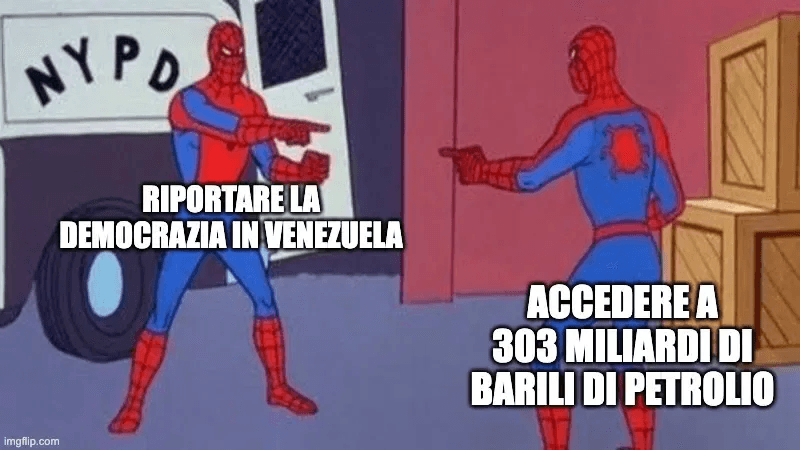
Venezuela has an estimated 303 billion barrels in reserves - the largest in the world. But current production is less than 1% of global supply, after years of underinvestment and the loss of skilled labor.
Trump stated: “Our great US oil companies will go in, spend billions of dollars, fix the badly damaged infrastructure, and start making money for the country. Then, they will be reimbursed.”
PDVSA (Petróleos de Venezuela) must be completely rebuilt: collapsed export terminals, destroyed logistics networks, wiped-out infrastructure. Bob McNally, President of Rapidan Energy Group, estimates that “just stabilizing existing production will require billions of dollars in low-single-digit amounts for workovers, power, water handling, and export infrastructure repairs.”
We are talking about massive industrial Procurement: engineering contractors, refinery equipment, logistics systems, port infrastructure. A multibillion-dollar project that could last for years.
If Venezuela were to return to producing significant volumes of heavy crude, it could:
Rebalance global pricing dynamics
Offer alternatives to the Middle East for heavy crude
Create new trade routes in the Caribbean
Reduce dependence on traditionally unstable markets
The geopolitical risk no one wants to see: Trump talks about working with interim President Delcy Rodríguez for a “democratic transition,” but political stability remains entirely unproven. There are zero constitutional guarantees on property rights, a history of expropriations, and to top it off, Trump has also threatened “military action” against Colombia and Mexico over drug trafficking. Regional instability is far from resolved.
Realistic timeline: Even in the most optimistic scenario, it will take 2-3 years before Venezuela produces volumes that truly impact the global market. Rebuilding a collapsed oil industry does not happen in a matter of months.
The lesson for Procurement? Supply markets can reopen suddenly because of geopolitical decisions. But “new market available” does not automatically mean “reliable market.” Due diligence on political stability, infrastructure, and track record remains essential. Venezuela offers opportunities, but it also carries enormous risks that must be assessed with extreme care.
🔗 Sources: AP News, The Guardian, Financial Times
🇸🇦 Saudi Arabia: 70% Local or Nothing - The Nationalization of Procurement
Saudi Arabia has decided to get serious about localizing purchases. The goal: 70% local content in all government contracts by 2030. This is not a slogan, it is official policy under Mohammed bin Salman’s Vision 2030 program.
The numbers that matter: the country is investing 3.3 trillion dollars in giant infrastructure projects such as NEOM, The Line, and the future Expo 2030 in Riyadh. Every public contract must demonstrate how much local content it includes, with tax incentives for those exceeding the targets and penalties for those falling short.
How does it work in practice? Companies must register on the government platform “Taqeem,” which calculates a localization score based on: percentage of Saudi workforce, local suppliers used, investment in local R&D, and technology transfer. Those with low scores are excluded from tenders or penalized in evaluation criteria.
Saudi Arabia wants to become a global manufacturing hub, but today it still imports almost everything. The result: multinationals must open local factories, train Saudi workers, and build supplier ecosystems from scratch. Those who do not adapt are shut out of a multi-trillion-dollar market.
For example, Siemens has opened a gas turbine production center in Dammam. General Electric has invested in a center of excellence for renewable energy. Honeywell has created a technology hub for smart city solutions. All of this is necessary to compete in mega public tenders.
Forced localization is redesigning global supply chains. It is no longer a matter of “where is it cheaper to produce” but “where MUST you produce to access the market.” Those planning now will win; those who wait will lose trillions in opportunity.
🔗 Sources: Procurement Magazine, MOF-SA
🖼️ Meme of the day
🎙 Compri Bene Podcast
🛒 Procurement Means Looking at the Data (and Actually Using It) — with Ernesto Schianchi (Pittarosso)
In the new episode of the Compri Bene Podcast, we speak with Ernesto Schianchi, Purchasing Director at Pittarosso.
From jewelry to perfumery to footwear: a journey that shows how those who come from the world of sales bring into Procurement a healthy obsession with data and with the final result.
300 stores, 90 million visitors per year, 27 million pairs sold. Ernesto tells us how purchasing is managed when every store is different, how to negotiate with brands to secure the prime shelf at the entrance, and why sharing data with suppliers instead of keeping it secret helps you sell 60% more.
🎧 Listen to the interview! ⬇️
💬 Your opinion matters!
Do you have feedback to share?
Write to us 📨 at compribene@compri.ai and let us know what you think! We are here to listen and make Compri Bene increasingly useful and interesting. ⚡
The Compri Bene team
Join compri,
10X your procurement team.
compri uses AI to make your procurement experience easier, faster and smarter. Get in touch to know more